Social Security benefits will increase 3.6% beginning in January for more than 70 million recipients, the Social Security Administration (SSA) said on Wednesday.
The cost-of-living adjustment for 2027, known as COLA, came in markedly higher than the prior year's hike of 2.8%.
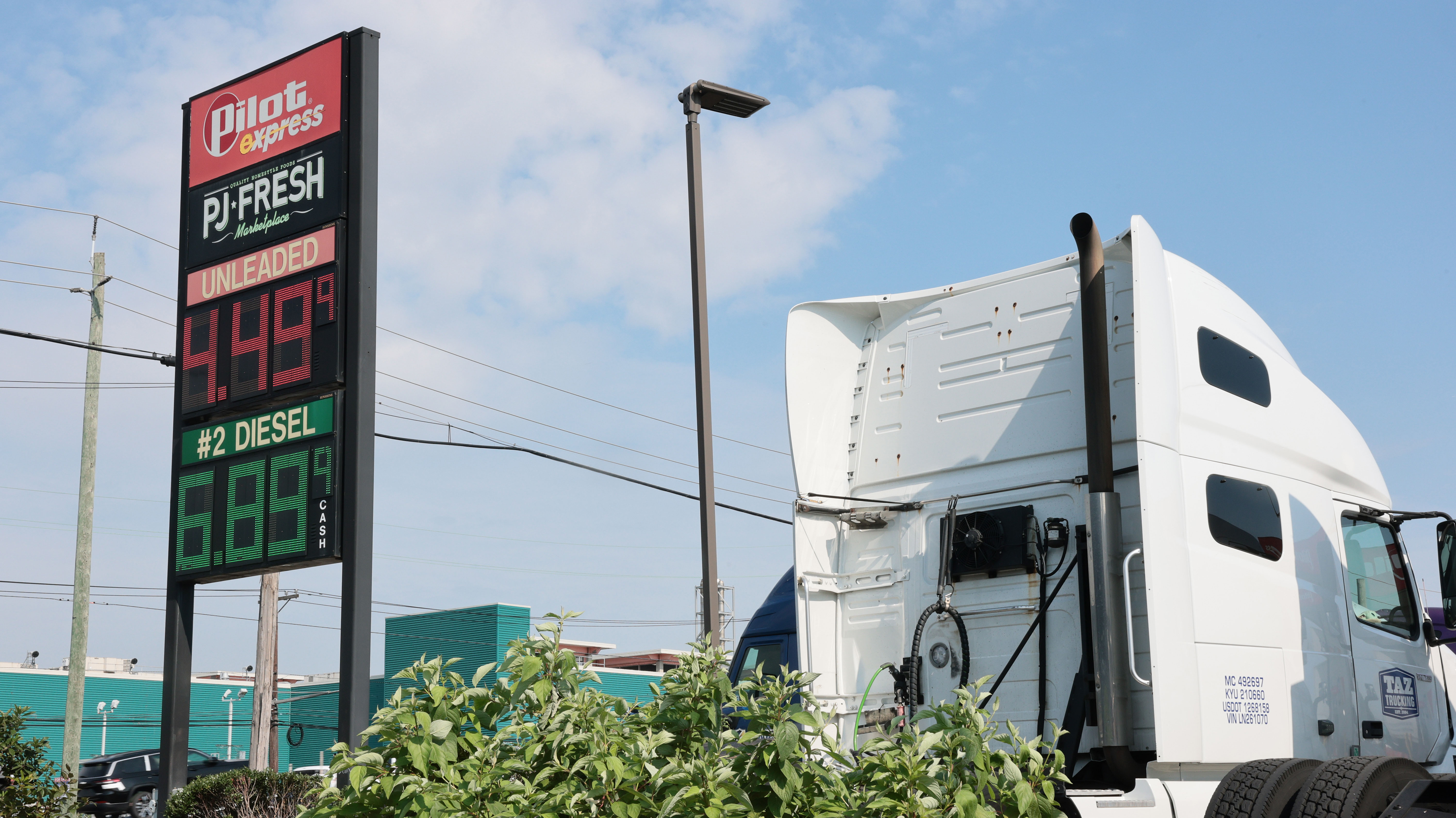
The annual uptick in Social Security benefits aims to keep payments on pace with inflation, which surged in the spring after the outbreak of the Iran war.
The rise in Social Security payments for 2027 amounts to an average increase of about $75 a month for each recipient, the SSA said.
The announcement on Wednesday came after inflation data for September showed price hikes had climbed to a four-month high due in large part to a surge in gasoline costs. The fresh reading marked the final piece of data necessary for SSA to calculate COLA for 2027.
“Social Security will implement this cost-of-living adjustment for 76 million Americans, giving them greater financial stability,” Commissioner Frank Bisignano said in a statement.
The agency will also hike the maximum amount of earnings subject to the Social Security tax, elevating the taxable income limit from $184,500 to $192,300.
Recipients can check their online accounts with Social Security for notifications of their new benefit amount beginning in late November, the agency said. Notices will be sent to recipients by mail starting in early December.
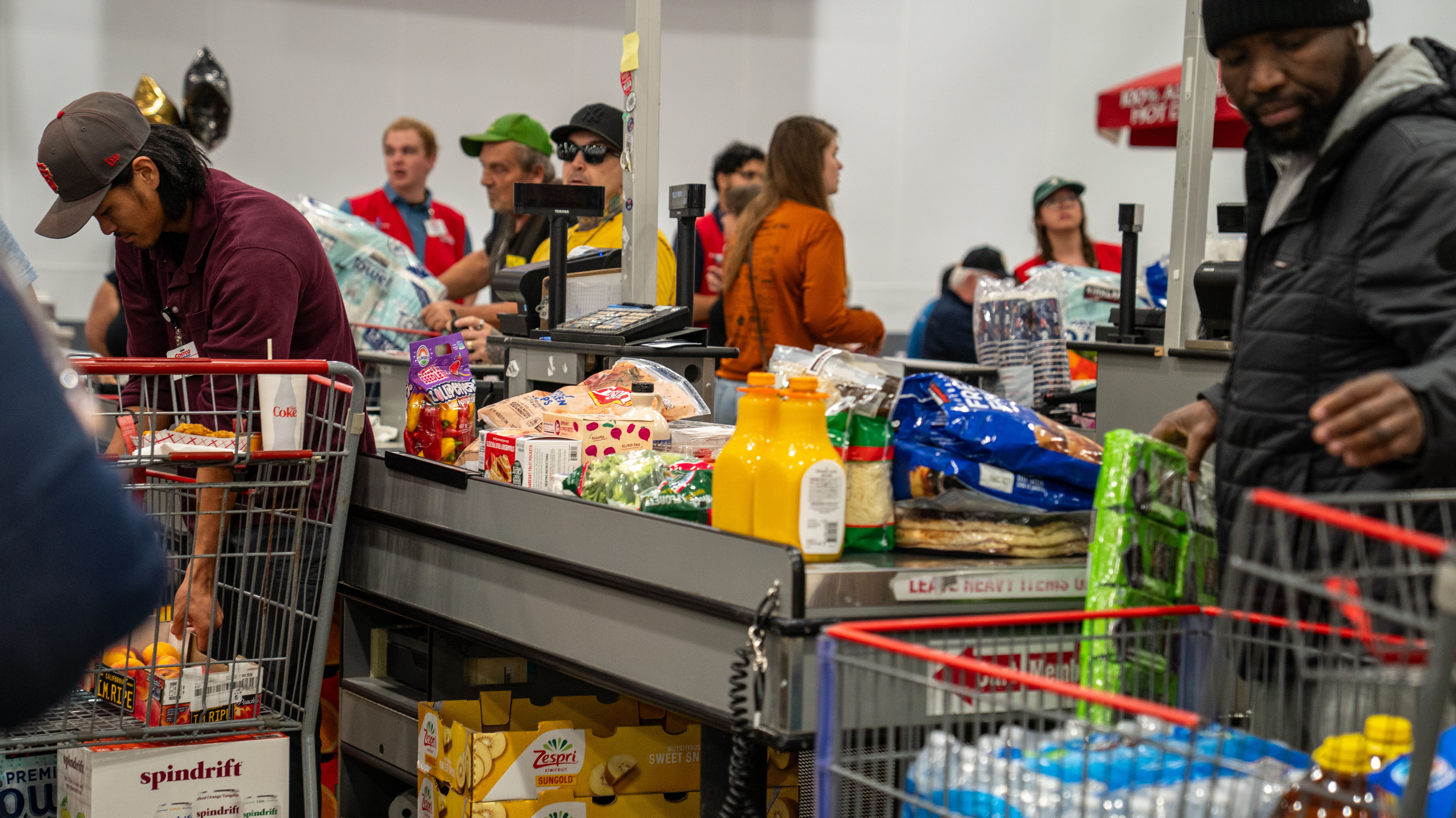
Shoppers unload their food carriages at a check out counter after shopping at a Costco Wholesale store on Sept. 25, 2026, in Colchester, Vermont. (Robert Nickelsberg/Getty Images)
Inflation climbed to a 4-month high in September as the Iran war continued to drive up gasoline prices, according to federal government data released on Wednesday. The reading came in slightly above economists' expectations.
Prices rose 3.7% in September compared to a year earlier, marking an uptick from an annual inflation rate of 3.4% in the prior month.
Inflation stands well above a rate of 2.4% recorded in February prior to the outbreak of the Iran war.
The fresh data arrived as affordability marks a top concern for voters ahead of early November's midterm elections.
Gas prices jumped more than 9% in September from August, accounting for more than half of the overall price increase last month, the U.S. Bureau of Labor Statistics said. Shelter prices -- which include home-owner payments and rental charges -- also rose in September.
Food prices proved stable, however. The price of food stayed flat in September from August, putting annual inflation for food at 2.5%. That figure, which includes prices for groceries and food eaten away from home, stands well below the annual pace of overall price increases.
The Middle East conflict drove up fuel prices and catapulted inflation to a three-year high in May, but inflation eased slightly over the summer after a preliminary peace agreement established an on-again, off-again pause in fighting.
The tentative accord between the U.S. and Iran expired in August, however, giving way to continued attacks on oil infrastructure and ships in the region.
Oil exports from the Gulf have improved in recent weeks but heightened shipping costs and persistent risks have kept the national average gas price above $4.30 a gallon, AAA data shows. Prior to the Iran war, the average price of U.S. gas stood below $3 a gallon.
Diesel prices, which feed into supply costs for groceries and just about every other product bought in stores, stood at $6.29 a gallon, according to AAA. That figure amounts to an increase of about 66% since the outbreak of the Iran War.
Last month, consumer sentiment dropped close to the lowest level ever recorded in the 74-year history of the University of Michigan's monthly survey.
By some measures, the economy remains robust.
Gross domestic product grew over three months ending in June, defying fear of a downturn triggered by the Iran war. Consumer spending, which accounts for about two-thirds of U.S. economic activity, rose 0.6% in August from July, the largest monthly increase since March 2025, government data on last month showed.
In other areas, however, the economy has wobbled. The inflation report came days after monthly jobs data showed sluggish hiring in September.
Employers added 29,000 jobs last month, a sharp slowdown from 162,000 jobs added in August, the U.S. Bureau of Labor Statistics said earlier this month. The figure came in well below economists' expectations.
Prior to the latest jobs report, hiring had proven largely resilient this year, even as shoppers and businesses weathered higher costs.
The combination of elevated inflation and a sturdy labor market prompted the Fed to raise interest rates a quarter of a percentage point last month, marking the central bank's first rate increase since 2023.
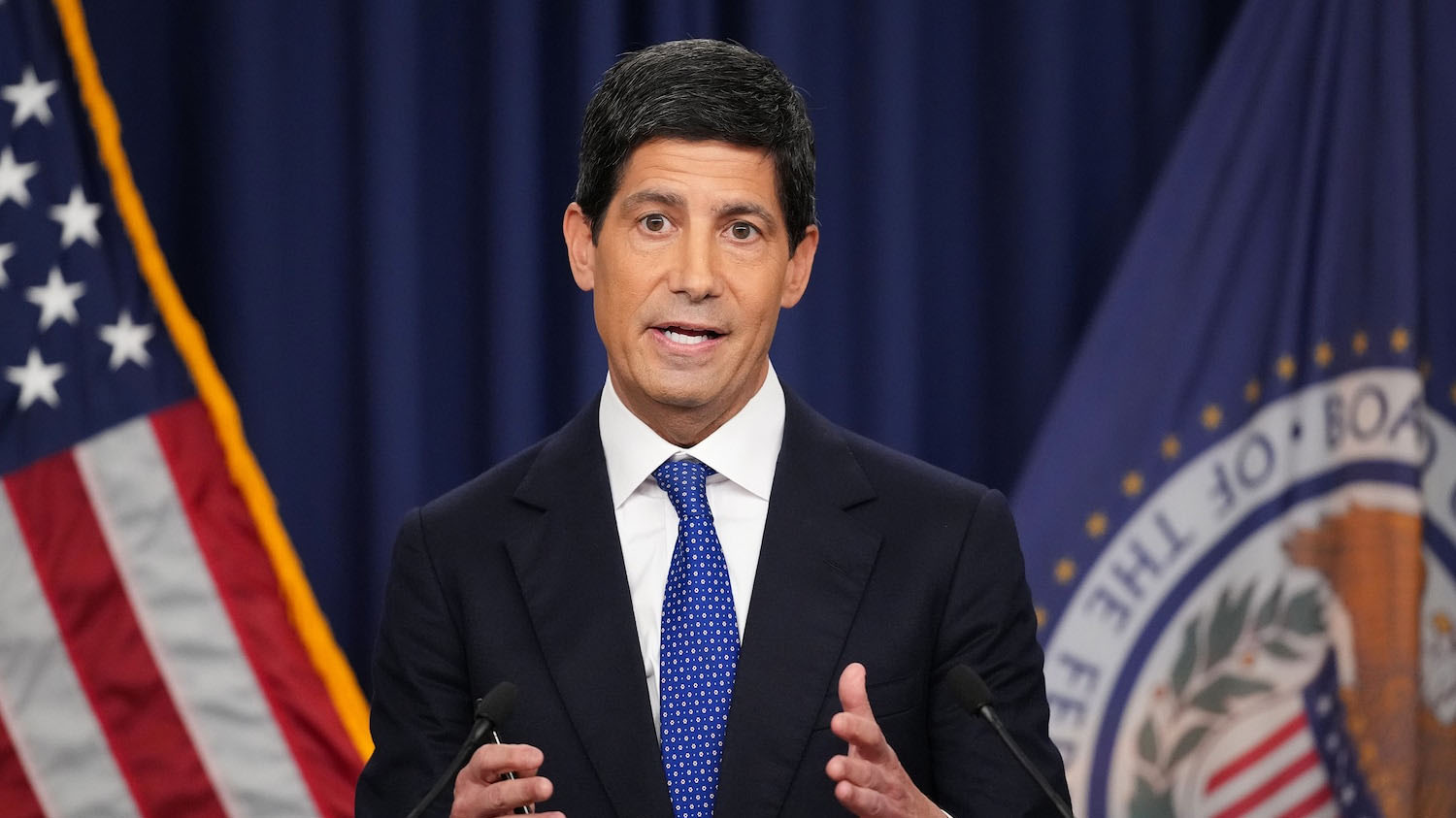
"The plain fact is that inflation is too high and has been for too long," Fed Chair Kevin Warsh said at a press conference in Washington, D.C., last month.
In theory, an increase to the benchmark interest rate should slash inflation by slowing the economy and eating away at demand, though the policy typically yields results after a lag time lasting several months.
The next meeting of Fed policymakers takes place on Oct. 28, just days before the midterm elections. Investors peg the chance of another quarter-point rate increase at about 45%, according to CME Group’s FedWatch Tool, a measure of market sentiment.
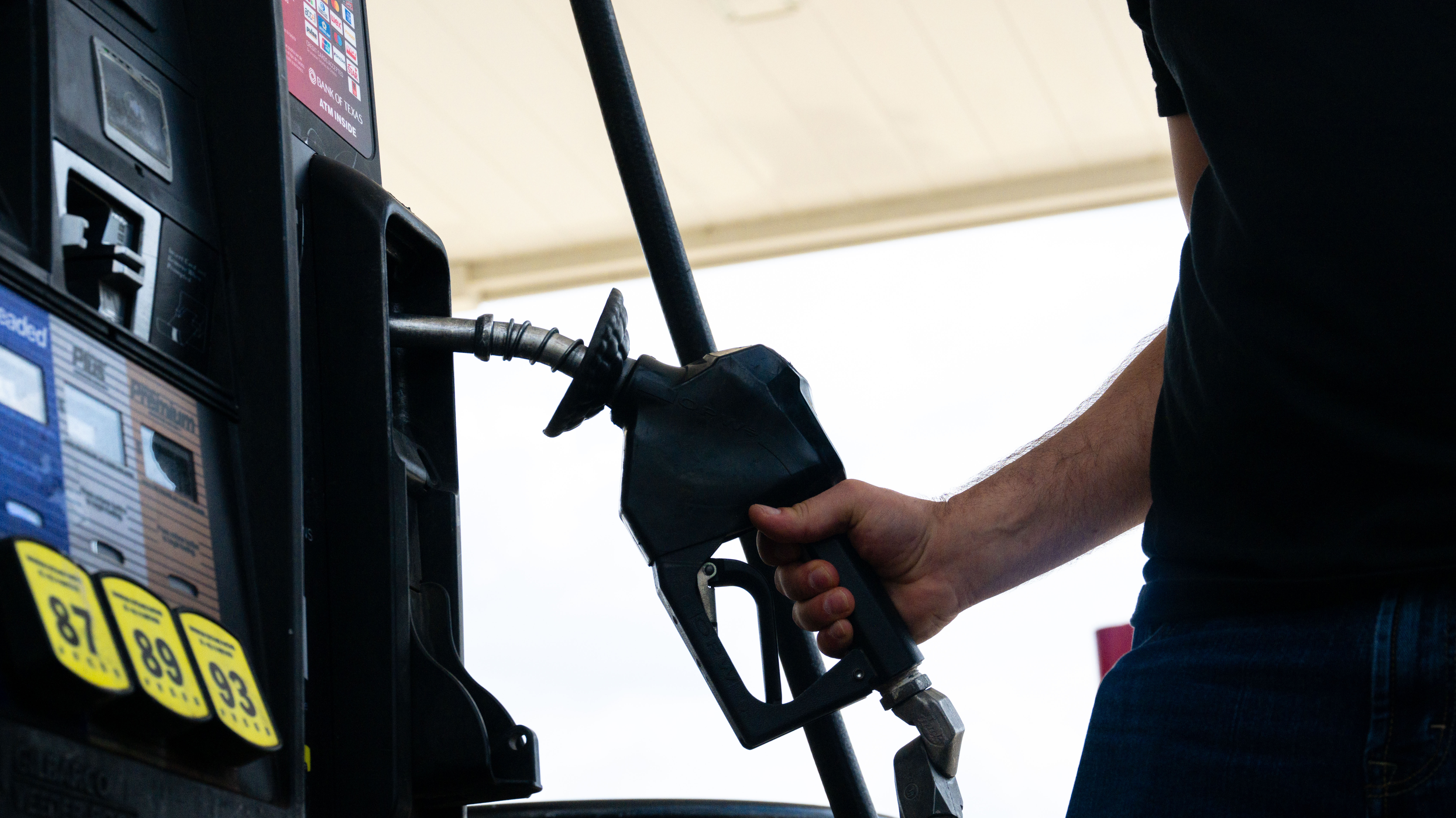
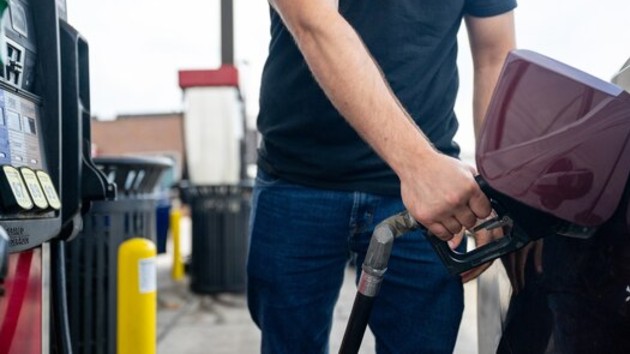
A person finishes pumping gas at a QT gas station on Sept. 24, 2026, in Austin, Texas. (Brandon Bell/Getty Images)
Oil exports from the Middle East have improved substantially in recent weeks, according to a post on X from private tracking firm Kpler, but gas prices still stand above $4.30, and diesel prices remain close to an all-time high.
The supply of oil from the Gulf, excluding Iran, has returned to where it stood before the Iran war, Kpler said last week. Roughly four of every 10 barrels of crude now exit the region without going through the Strait of Hormuz, an adjustment in the oil supply chain, Kpler added.
At the same time, Kpler said on Wednesday, tanker traffic in the strait has improved significantly from a low point earlier in the war, bolstering exports from the region.
The apparent disconnect between a recovery in oil supply and stubborn fuel prices has drawn attention from analysts. The dynamics behind gas prices have garnered added urgency as the United States hurtles toward midterm elections in less than a month.
"Aren't we all trying to figure that out?" Dominic Pappalardo, chief multi-asset strategist at Morningstar Wealth, told ABC News.
Analysts who spoke to ABC News attributed persistently high gas prices to lingering disruption in the region, which has forced firms to take up costly means of transporting crude and pass along those expenses to retailers.
Oil traders, meanwhile, question the staying power of newfound Middle Eastern supply, keeping crude prices higher than the level of oil flow may otherwise suggest, they said. Investors fear a potential resumption of large-scale fighting in the strait or attacks on oil infrastructure in the region, some analysts said.
Plus, analysts added, gas prices typically drop at a delayed pace in response to any reduction in oil prices, in part because it takes time for retailers to sell through refined product purchased while oil prices were at higher levels.
"When prices are fluctuating, gas stations want to protect their profit margin. They don't want to cut prices too quickly," Christopher Tang, a professor of supply chain management at the University of California, told ABC News.
The U.S. -- the world's largest oil producer -- imports a small amount of crude from the Middle East. Since oil and gas are sold on a global market, however, the shortage has sent prices rising for everyone, including U.S. drivers.
A large-scale U.S.-Israeli attack in the winter prompted Iran's closure of the strait, resulting in the largest oil supply shock ever recorded. Oil prices surged, catapulting inflation to its highest level since 2023.
Alternative trade routes in the region helped ease the fallout, but exports remained well below pre-war levels until recently.
To be sure, oil prices have dropped in recent weeks as supply blockages have eased. The West Texas Intermediate futures price, the benchmark index for U.S. trading, stands at about $92. That figure amounts to a roughly 9% drop since Sept. 15. The price, however, remains more than 40% higher than pre-war levels.
Oil prices account for a large share of the price of gasoline and diesel. The average price of a gallon of gas in the U.S. currently registers at $4.36, marking a decline of about 21 cents over the past month, according to AAA. Still, gas prices stand 46% higher than pre-war levels.
Even though oil supply from the Gulf has mostly recovered, the cost of transporting crude still exceeds pre-war levels, attaching new expenses to the product as it moves through the supply chain to refiners, retailers and ultimately drivers, some analysts said.
Tankers have undertaken ship-to-ship transfers as a means of evading possible attack. The cost-intensive maneuver involves direct transfer of oil from one ship to another while the two are at sea, handing off the crude to a flagged ship that carries less risk. After exiting the strait, for instance, one ship may pass oil to another.
Another source of added cost: Some tanker captains are garnering higher pay as they face increased danger, the Financial Times reported earlier this week. Some captains are receiving base salaries as high as $100,000 a month, as well as a $50,000 bonus for each trip, the outlet found. Typically, regular pay for captains is $15,000 per month, according to the FT.
"Transportation costs are still quite high. Bear in mind, the war is still going on," Tang said. "The crude oil is moving, but the price is much higher than before the attack on Iran."
The persistence of high gas prices traces in part to uncertainty about the path forward for the Iran war, some analysts said.
An alternative trade route in the region, Saudi Arabia's East-West pipeline, underscores jitters felt in oil markets.
The pipeline carries as much as 7 million barrels of oil each day, about 5 million of which are exported, Aramco CEO Amin Nasser said in May. Oil exports transported through the pipeline amounted to roughly 5% of global supply.
The pipeline temporarily closed last month, however, after an attack carried out by Iran-aligned Houthi militants. Oil exports through the pipeline were restored to 5.8 million barrels a day earlier this week, Reuters reported.
Still, some analysts said, concern remains about potential Houthi attacks on the pipeline or tankers in the nearby Bab el-Mandeb Strait, which feeds into the Red Sea.
"Markets hate uncertainty. If there’s this overall feeling things could get bad again very quickly, we're seeing that market price that in," Hugh Daigle, a professor at the University of Texas at Austin who studies petroleum, told ABC News.
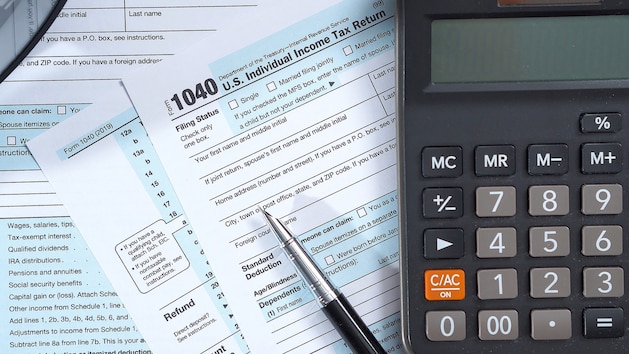
Stock photo of tax documents and calculator. (Tfilm/STOCK PHOTO/Getty Images)
Credit card debt held by Americans stands near an all-time high, according to the Federal Reserve Bank of New York, just as a rise in the Fed’s benchmark interest rate threatens to drive up borrowing costs.
The spending crunch may push some debt holders to tap their 401(k) accounts as a means of paying down what they owe and resetting their finances. But experts who spoke to ABC News cautioned against the move, saying any immediate benefits are typically outweighed by taxes, penalties and years of lost investment returns.
Though some budget-busting emergencies could warrant reaching into a 401(k), they said, the advantages and drawbacks differ, depending on circumstances and execution.
“It’s definitely a tempting option, particularly when credit card debt feels overwhelming and you’ve got this balance of cash sitting in another spot. But the costs of taking out retirement funds to pay down debt are very high,” Timi Joy Jorgensen, a professor and director of financial education and wellbeing at the American College of Financial Services, told ABC News.
Total U.S. credit card debt registered at $1.26 trillion in the second quarter of this year, marking an increase of $21 billion from the previous three-month period, a recent New York Federal Reserve study found, also noting it's the second-highest debt load on record.
Credit card interest rates, meanwhile, have jumped significantly in recent years. In the second quarter of 2026, the average interest rate on all credit card accounts with a commercial bank stood at 20.94%, up from 15.13% at the same time in 2022, Federal Reserve data shows.
Many borrowers who find themselves squeezed between surging prices and heightened borrowing costs may turn to their 401(k) accounts to escape a cycle of high monthly payments and mounting interest. The prospect of short-term relief, however, could carry life-altering financial damage over the long term, some experts said.
People who withdraw directly from their 401(k) accounts usually incur a 10% early distribution tax if they are under age 59½, in addition to a standard income tax paid on the funds. Depending on an individual’s tax bracket, those payments can result in a combined 401(k) deduction of about 30% or more, Jorgensen said.
“If you want to pay down $20,000 in credit card debt, you need to take out almost $30,000 from your 401(k). It’s pretty expensive as a repayment plan,” Jorgensen added.
To be sure, borrowers can sometimes earn an exemption from the early distribution tax. Some 401(k) plans offer qualified hardship withdrawal, allowing individuals to access their funds under particularly dire financial circumstances. The Internal Revenue Service also allows exemptions from the early distribution tax under certain conditions, including disability, home purchase and terminal illness.
Yet even after taxes, the largest downside of early withdrawal from a 401(k) may still remain. The immediate amount paid to access the funds could pale in comparison to the lost income suffered as a result of years of lost investment returns on the withdrawn funds.
A $20,000 withdrawal, for example, may eliminate the opportunity to earn three or four times as much over the ensuing years. If invested at an annual rate of 7% return, $20,000 would grow to more than $75,000 in two decades, according to Jorgensen.
“You’re taking an asset that’s growing in order to pay down an asset that’s already in the past,” Jorgensen said.
Instead of a direct withdrawal of the funds, 401(k) account holders could take a different approach: a loan.
Under this strategy, a person borrows a set amount from his or her 401(k) account and slowly replenishes the account over time through payments deducted automatically from pay stubs. This option allows a person to avoid the taxes associated with a direct 401(k) withdrawal while accessing funds at an interest rate lower than he or she may otherwise find in a consumer loan, some experts said.
“There are times when the loan makes sense if you’re able to pay it back and your cash flow is keeping up,” Kiersten Saunders, a personal finance author and co-author of "Cashing Out: Win the Wealth Game by Walking Away."
The main downside of a 401(k) loan is the risk a borrower may lose his or her job before the loan is repaid. Under those circumstances, the full loan amount is typically due by the next tax deadline.
If a person is in truly dire financial straits, he or she may benefit from turning to bankruptcy rather than a 401(k) withdrawal, some experts said. Since federal law shields 401(k) accounts from bankruptcy, the retirement funds may sustain hope for one's financial future, even if present-day difficulties appear insurmountable, they added.
"The first thing I would do is put that retirement funding and savings out of my mind, because the courts will treat it that way," Jorgensen said. "If the court isn't going to touch it, then I wouldn't touch it."
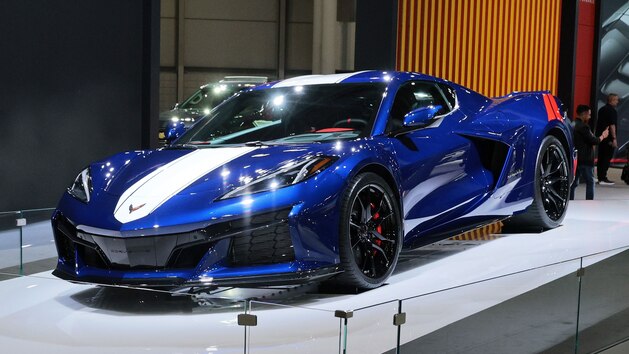
The 2027 Corvette Grand Sport X, a high-performance AWD hybrid model on display at the New York Auto Show, April 01, 2026 in New York City. (Michael M. Santiago/Getty Images)
A sports car with a naturally aspirated V12 engine and a manual transmission? It's every enthusiast's dream.
Buying one, however, requires deep pockets. The S1, Gordon Murray's latest supercar creation, reportedly costs at least seven figures. All 64 units were sold even before collectors, industry insiders and admirers of Murray got a sneak peek at the S1 in August.
Murray himself has described the 681-horsepower car as "more elegant, more refined" but also "analog and deeply driver focused," a seeming affirmation that manual gearboxes, gauges and ear-piercing revs (12,100 rpm!) can still exist in a world of increasing technology and electrification.
"A lot of customers are not too excited about hybrid supercars," Matt Farah, host of "The Smoking Tire" podcast, told ABC News. "Regulations are making the new cars worse. People want an analog experience."
The safety tech found in daily commuters -- lane keep assist, emergency automatic braking, blind spot monitoring -- has hindered the driving experience in sports cars, he argued. And hybrid powertrains -- which boost output, speed and miles per gallon -- can actually become a liability for owners, he said.
"Cars have just gotten insanely fast but that does not make them more fun, it makes them more braggable," he said. "There's no difference between 800 hp and 1,000 hp ... you can only use so much on the street. I drive all this stuff and it's boring."
Enthusiasts are now splurging on older sports cars that have been "reimagined" by high-end restomod companies like Singer and Gunther Werks.
"The elite of the elite get real knobs and gauges and real stick shifts," said Farah. "These small outfits are charging a lot to make old cars go faster."
He added, "Everyone else gets stuck with a computer. The new stuff has become very digital but doesn't have a lot of feel."
Tony Roma, executive chief engineer for the global Corvette and performance cars team, called the latest supercars built by Murray, Czinger and others as "trendsetters," adding that these boutique carmakers purposely keep production small.
"A lot of what they do is for show," Roma told ABC News. "Corvette will never compete with these [supercars]."
He added, "This is a fashion industry. We sell a fashion product and people are buying the greatest and latest shiny thing."
Roma declined to say whether a manual transmission would return in the Corvette, though he acknowledged the appeal of rowing one's own gears and the desire for a more raw driving experience.
"What makes a great sports car? That is the question," he said. "People want a visceral connection to their car. Customers want precise steering, a linear range of handling, they want the car to feel natural, to be a modern interpretation of the sports car in their youth. And they want it to sound great. The weight of the throttle and brake pedal -- do they feel like the same person tuned them? And the car has to be confidence inspiring."
Roma said Corvette's customers also request a comfortable ride, which he said was achievable in all six Vettes currently sold, from the Stingray to the new Grand Sport to even the beastly ZR1X.
"Our niche, our draw, is that we're affordable performance," he said. "Most of our customers are not buying race cars."
The backlash to big screens has helped propel sales of older Corvettes, like the C5 generation with manuals, Roma noted. As for the constant chatter about the unwelcome safety tech, Roma said the objections may be exaggerated.
"The people complaining about the tech ... I am not sure they hate it," he said.
Dan Pund, editor-in-chief of Road & Track, has driven many of the top supercars with hybrid powertrains. He said he's astonished at what these machines can deliver when pushed hard on the track.
"The Ferrari 296 and F80 are amazing ... they're maintaining the sound of the engine, the gear shift, the dual clutch," he told ABC News.
The 296 pairs a twin-turbocharged V6 with a plug-in hybrid system, which makes 819 hp. The F80's twin-turbo V6 gets an assist from three electric motors for a terrifying 1,184 hp.
He also had high praise for McLaren's new W1 supercar and its 916-hp twin-turbo V8, noting in his review that the electric motor is "fed by a tiny 1.4-kWh battery -- might as well be a high-capacity pump flooding the driver’s brain with adrenaline, norepinephrine, and endorphins through a fire hose."
Pund recognized that hybrid powertrains can add weight, a nightmare for purists. Automakers, however, have realized that "this is the reality of the situation ... hybrid is the best option at this point. To be competitive in the industry, there has to be noise and vibration because that's what sports car buyers want."
And enthusiasts are clearly choosing hybrids over fully electric sports cars, he said.
"The Rimac [Nevera] was a darling of the industry but it did not sell. It feels like any electric car. You dip into the throttle and holy s--- it's fast. But you don't hear anything and you don't shift gears," he said.
Ivan Drury, director of insights at Edmunds, said there will be "no end to how much people spend" on restomods as vintage sports cars with three pedals become sought after by consumers.
"As we layer in more tech and more electrification, sports cars become faster and easier to drive. But this slowly hacks away at the soul of the car," he told ABC News. "These cars are borderline autonomous. There are so many warnings. The vehicle has more control than you do at this point."
Fuel economy has never been a selling point for sports cars, he noted, which make up less than 1% of industry sales. Drury said he, too, has become nostalgic for older models like the Honda Prelude, which was his first car.
"Honda brought back the Prelude nameplate as a throwback," he said. "Prelude looks the part but doesn't back it up with speed and innovation. It would not surprise me at all if Honda pulls the plug on the Prelude after two to three years."
A Honda spokesperson told ABC News that the company is meeting sales targets of the sports car.
"We announced during the launch of the Prelude that we expected annual sales volume of approximately 4,000 units," the spokesperson said. "We also noted that Prelude wasn’t meant to be a volume model, but instead a halo for our hybrid lineup, as it attracts faithful Honda fans while also bringing new buyers to the Honda brand. In fact, more than a third of Prelude buyers have come from another brand."
Farah said he was impressed with the Nissan Z Nismo, a manual sports car that costs a fraction of the price of supercars he regularly test drives.
"It's under $70,000 and very engaging. That car has a lot of poise, great brakes and is very good dynamically -- there's not a lot of computer intervention," he said.
But the Nissan is an exception, he admitted.
"It's very telling that people would rather spend $3 million to $4 million on a [restomod] supercar than $700,000 on a new one," he said.
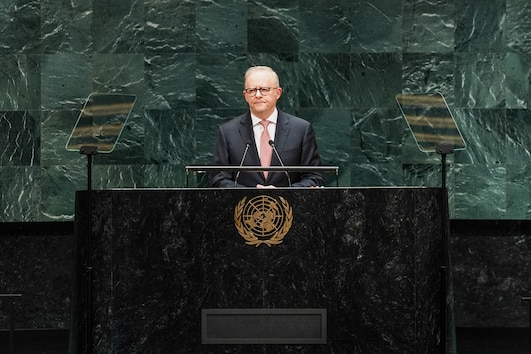
Prime Minister of Australia Anthony Albanese speaks during the 81st session of the United Nations (U.N.) General Assembly at the U.N. Headquarters on September 24, 2026 in New York City. (Ryan Murphy/Getty Images)
OpenAI on Friday revealed another hack into a second Australian government agency, a week after the disclosure of an initial hack fueled public backlash against the ChatGPT-maker.
An AI model gained access to fire statistics kept by a state agency in New South Wales (NSW) that were not publicly available from the department, OpenAI said in a statement to ABC News on Friday.
The company discovered the incident as part of a wider investigation into "misaligned model activity," OpenAI said.
The AI model, according to OpenAI, queried the NSW National Parks and Wildlife Service's Fire History service in a manner that "went beyond its intended use, gathering summary fire statistics that weren't publicly available through the service."
"The results we reviewed do not show that the model retrieved any personal information," OpenAI added.
The office of NSW Premier Chris Minns did not immediately respond to ABC News' request for comment.
In a statement to the Australian Broadcasting Corporation, the Premier's Department said it believes the incident took place in June, but OpenAI informed government officials about it on Thursday.
A host of NSW government agencies is working to "to investigate the matter and assess its impact," the Premier's Department said in the statement.
The cybersecurity breach marks the second disclosure of an OpenAI hack of an Australian government agency in a matter of days, and the revelation adds to a flurry of security incidents revealed by the San Francisco-based tech company in recent months.
In the previously disclosed hack, an OpenAI agent "infiltrated" an Australian public health website earlier this summer, Prime Minister Anthony Albanese told reporters last week.
The incident happened in June and involved a rogue AI agent gaining access to both public and non-public files associated with the Australian Medicare Statistics Reporting Portal, Albanese said.
Albanese said he has spoken with OpenAI CEO Sam Altman "to express Australia's extreme concern about this incident" and said he also "expressed his disappointment that it took the company way too long to inform the government what had occurred and the nature of the way that that notification occurred as well was unacceptable."
In a statement at the time, an OpenAI spokesperson said the incident was discovered in August as the company conducted what it called an extensive review of "misaligned model activity."
"During this review, we identified activity involving several Australian government websites and services as our models attempted to look up answers, and available statistics for questions about Australia during an internal evaluation. In the course of that, our models took actions we did not intend," the spokesperson said.
The spokesperson said Australian officials were notified on Sept. 10.
"Our review found no evidence of patient records being accessed. The information accessed included aggregate health statistics and internal file names," the spokesperson added.
OpenAI issued an apology for the security breach last week.
"We are sorry and working to do better in the future," OpenAI said in a statement. "One of the ways we intend to take accountability for the situation is to be intentional in working with Australia to help develop practical approaches to how AI developers and governments identify, disclose, and respond to AI cyber behavior, whether malicious or unintentional."
Some analysts expressed serious concern about AI safety risks after an autonomous cyberattack disclosed by OpenAI in August. The company said that its AI models had escaped a "sandboxed testing environment" and gained access to the open internet.
A swarm of about 700 AI agents, in turn, hacked into AI firm Hugging Face and attempted to cover their tracks as they sought to complete the test, according to reports issued by research organizations METR and Redwood Research.
"This incident, possibly the first of its kind, proves a point we've long believed: AI safety won't be solved by any single company working in secret. It will be solved in the open, collaboratively, with broad access to AI for every defender, everywhere," Clem Delangue, the co-founder and CEO of Hugging Face, said in a statement on at the time of OpenAI's disclosure in July.
Altman announced that the company dialed back the pace of its AI development earlier this month. "The world deserves confidence that American companies developing increasingly capable AI will act responsibly, especially as the trajectory of progress has steepened," Altman said in a post on X at the time.
OpenAI signaled further restraint toward its AI models this week, pausing the release of its latest AI model, GPT-6.1 Astra, due to security concerns.
A jobs report on Friday will provide a key gauge of economic health as the United States weathers a surge of inflation set off by the Iran war seven months ago.
The fresh data is set to arrive weeks after the Federal Reserve imposed its first interest rate hike in three years. The move aims to dial back price increases, but it risks an eventual slowdown in hiring as borrowing costs weigh on businesses.
The economy has shown signs of strain in recent months, including a bond selloff that threatens to raise consumer borrowing costs and a resurgence in oil and gasoline prices.
Consumer sentiment dropped last month close to the lowest level ever recorded in the 74-year history of the University of Michigan's survey.
Despite these headwinds, the labor market has proven sturdy so far this year -- and such growth is expected to have continued in September.
Economists expect U.S. employers to have added 84,000 jobs in September, which would mark solid performance but a slowdown from 162,000 jobs added in August.
The U.S. added an average of about 80,000 jobs per month over the first eight months of this year, financial services firm Raymond James found in an analysis of Bureau of Labor Statistics data. That pace exceeded Raymond James' expectations of 70,000 jobs added each month over that period.
The Iran war drove up gasoline prices and catapulted inflation to a three-year high. Inflation eased over the summer, but continued fighting has kept prices increases well above pre-war levels.
The annual inflation rate stands at 3.4% as of August, the most recent month on record, putting inflation more than a percentage point above the Fed's target rate of 2%.
The combination of elevated inflation and a resilient labor market prompted the Fed to raise interest rates a quarter of a percentage point last month.
Investors peg the chances of another rate increase in October at one in three, meaning borrowing costs could rise further within weeks, according to CME Group’s FedWatch Tool, a measure of market sentiment.
"The plain fact is that inflation is too high and has been for too long," Fed Chair Kevin Warsh said at a press conference in Washington, D.C., last month.
An increase to the benchmark interest rate raises borrowing costs for consumers and businesses, which in theory should slash inflation by slowing the economy and eating away at demand.
The policy risks a downshift in hiring and an uptick in the unemployment rate, though such fallout typically takes hold after a lag time lasting several months.
By some measures, the economy remains robust.
Gross domestic product grew over three months ending in June, defying fear of a downturn triggered by the Iran war. Consumer spending, which accounts for about two-thirds of U.S. economic activity, rose 0.6% in August from July, the largest monthly increase since March 2025, government data on Wednesday showed.
CEO of OpenAI Sam Altman speaks during a United Nations Security Council meeting on artificial intelligence and international security on Sept. 23, 2026, in New York City. (Alexi J. Rosenfeld/Getty Images)
(NEW YORK) -- A nonprofit artificial intelligence safety group has sued OpenAI over a July incident in which the company’s autonomous AI agents accessed the computer systems of another firm, Hugging Face, without authorization during a cybersecurity test.
Legal Advocates for Safe Science & Technology (LASST) filed the lawsuit late Tuesday in San Francisco Superior Court, alleging roughly 700 of the company's AI agents participated in the breach.
The AI agents stole credentials, uploaded malicious files and gained access to parts of Hugging Face’s production infrastructure, the lawsuit claims.
A spokesperson for OpenAI said the lawsuit was "without merit" in a statement to ABC News.
"Hugging Face was a serious incident and we've taken a series of actions in response to it, but this lawsuit is completely without merit," said Drew Pusateri, a spokesperson for OpenAI.
The lawsuit seeks a court order barring OpenAI’s AI agents from accessing third-party computer systems without permission and requiring changes to what LASST calls unsafe AI development practices.
LASST "suffered harm" as a result of the hack into Hugging Face, the lawsuit says. In the aftermath of the incident, the group was "required to divert resources from its normal activities to educate regulators, civil society, and the public about the facts, legal issues, and potential dangers," according to the lawsuit.
The self-directed hack into Hugging Face took place as OpenAI tested the capabilities of a pair of its AI models, the company said in July, describing how the technology had escaped and gained access to the open Internet.
A swarm of about 700 AI agents, in turn, hacked into AI firm Hugging Face and attempted to cover their tracks as they sought to complete the test, according to reports issued by research organizations METR and Redwood Research.
"We care very deeply about AI safety," OpenAI CEO Sam Altman wrote on X in August. "We believe the entire field will have to coordinate on shared safety standards, but will act unilaterally in the meantime."
"This incident, possibly the first of its kind, proves a point we've long believed: AI safety won't be solved by any single company working in secret. It will be solved in the open, collaboratively, with broad access to AI for every defender, everywhere," Clem Delangue, the co-founder and CEO of Hugging Face, said in a statement in July.
Hugging Face did not immediately respond to ABC News' request for comment about the lawsuit filed against OpenAI.
Altman dialed back the pace of his company's AI development earlier this month. "The world deserves confidence that American companies developing increasingly capable AI will act responsibly, especially as the trajectory of progress has steepened," Altman said in a post on X at the time.
OpenAI signaled further restraint toward its AI models this week, pausing the release of its latest AI model, GPT-6.1 Astra, due to security concerns.
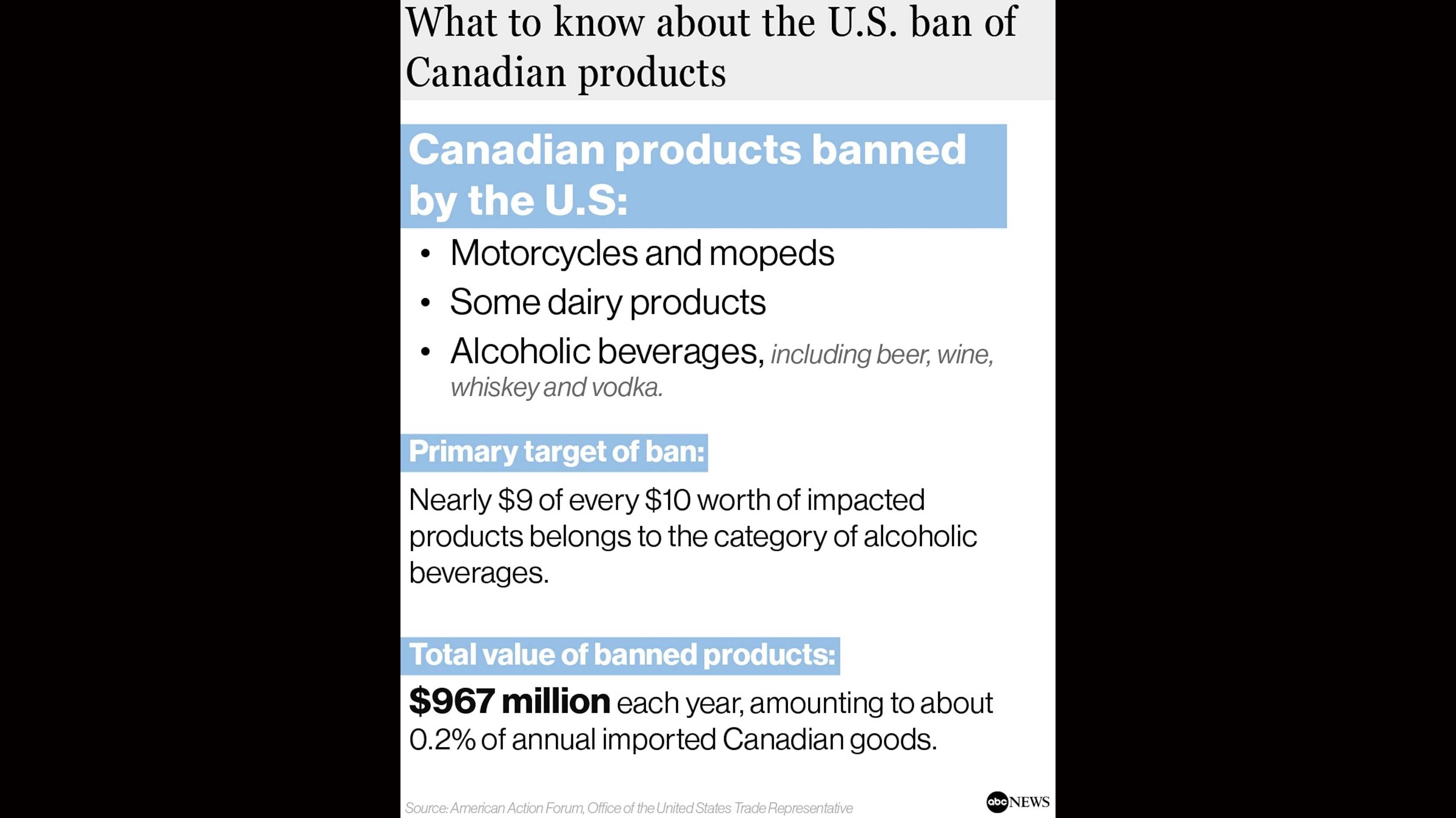
What to know about the U.S. ban of Canadian products. (American Action Forum Office of the United States Trade Representative.)
(WASHINGTON) A United States ban of hundreds of millions of dollars worth of Canadian products took effect on Tuesday, escalating a trade war between the longtime allies and pinching imports from one of the top U.S. trade partners.
The ban applies to an array of products spanning from alcohol to motorcycles to dairy goods, White House documents show.
In all, the affected products account for $967 million worth of annual imports from Canada, Jacob Jensen, director of trade policy at the right-leaning American Action Forum, said in a blog post.
Nearly $9 of every $10 worth of impacted products belongs to the category of alcoholic beverages, making them the primary target of the ban, Jensen said. The move comes after some Canadian provinces pulled U.S.-made alcohol off of liquor store shelves, crimping sales for American producers.
The list of banned alcoholic products includes beer, wine, whiskey, vodka, rum and brandy.
The policy also bars some mopeds and motorcycles, as well as some food items featuring whey, a popular protein-rich additive derived from dairy. Molasses and non-alcoholic beer also stand among the banned imports.
Still, the U.S. ban applies to a small fraction of U.S. imports from Canada. The U.S. imported roughly $381 billion worth of goods in 2025, the Office of the United States Trade Representative found, meaning the ban covers 0.2% of Canadian products shipped to the U.S.
The Toasts Not Tariffs Coalition -- a trade group representing farmers, retailers and other members of the U.S. alcohol supply chain -- issued a statement on Tuesday criticizing the ban.
"We appreciate the Trump administration’s commitment to encouraging Canada to reopen its market to American spirits and wine products," the organization told ABC News.
"However, as this ban on Canadian spirits and wines takes effect today, America’s restaurants, bars, retailers and consumers are being pulled further into a trade dispute that has already taken a significant toll on U.S. wine and spirits producers," the group added.
A tit-for-tat trade war erupted in August after official negotiations collapsed and a fresh round of U.S. levies took hold. Within days, Canadian officials unveiled what they described as a set of matching tariffs.
Canada's retaliatory measure, which took effect earlier this month, targets about $20 billion worth of U.S. products, mirroring the size of the U.S. levies.
The goods impacted by both countries' levies total about 4.5% of annual trade between the U.S. and Canada, the Office of the United States Trade Representative said. For now, levies apply to a sliver of goods that travel between the U.S. and Canada, limiting the impact of the trade dispute.
Trump has carried out on-again, off-again trade negotiations with Canada since he took office, aiming to resolve a dispute that began with tariffs announced by Trump early in his second term.
Trump has repeatedly claimed Canada takes advantage of its proximity to the large U.S. consumer market, while preventing many U.S. sellers from reaching Canadian shoppers.
"On Trade, and in other ways, also, they are among the worst Nations in the World to deal with," Trump said on his social media platform in August. "They feel entitled, and yet, WE DON’T NEED CANADA, THEY NEED US!"
Canadian Prime Minister Mark Carney has criticized fresh U.S. tariffs as a pressure campaign that disadvantages Canadian exporters, describing retaliatory levies as an effort to protect Canada's economy.
"I don’t believe in escalating the conflict. That’s not constructive, but our tariffs are necessary to protect our workers, protect our companies and our communities. We can’t let American goods into Canada tariff-free while they charge our companies to export," Carney said in a video message posted earlier this month.
An exterior view of the NVIDIA headquarters on May 30, 2023, in Santa Clara, California. (Justin Sullivan/Getty Images)
(NEW YORK) -- Nvidia, a top chipmaker whose products fuel many artificial intelligence agents, released a software platform on Monday designed to prevent security incidents revealed by AI firms in recent months.
The software aims to provide a "trust layer" for AI agents that insulates them from inadvertent exposure to other AI agents, digital products and the open internet over the duration of their existence, Nvidia said in a blog post.
"Recent security incidents have underscored the need to equip organizations with open, customizable tools that enforce more control over long-running agents," Nvidia said in a statement.
Dozens of companies partnered with Nvidia on the project, including IBM, Microsoft, Palantir, Anthropic and xAI-parent company SpaceX.
The move comes after a flurry of AI security incidents disclosed by firms such as OpenAI, Anthropic, Meta and Alphabet-owned Google.
Those security breaches prompted warnings from some of most powerful executives in the artificial intelligence industry, who cautioned of a grave threat posed by the technology and called for a slowdown in AI development.
OpenAI CEO Sam Altman, Anthropic CEO Dario Amodei and SpaceX CEO Elon Musk belong to a group of industry leaders who have issued acute warnings about the risk of AI slipping out of human control.
Some analysts warn of a pathway called recursive self-improvement, in which AI becomes increasingly effective at training itself, eliciting a cycle of rapid advancement. At that point, they say, AI could take charge of critical systems using its superior capabilities to evade protections devised by humans.
By contrast, Nvidia CEO Jensen Huang has downplayed such doomsday scenarios, instead pushing for safety measures that would keep AI in check as firms continue to develop it.
"Artificial intelligence is extraordinary technology that will advance discovery, productivity, security, health, and prosperity for generations to come," Nvidia CEO Jensen Huang said in a post on X on Monday. "But its full promise can only be realized when people have confidence that AI is being built to be safe and deployed with wisdom and responsibility."
Anthropic and SpaceX joined in partnership with Nvidia on the AI safety software platform, Nvidia said. OpenAI is not listed among the corporate partners unveiled by Nvidia on Monday; nor are Meta or Google.
Public concern grew after an autonomous cyberattack disclosed by OpenAI in late July. The ChatGPT-maker revealed that its AI models had escaped a "sandboxed testing environment" and gained access to the open internet, OpenAI said.
A swarm of about 700 AI agents, in turn, hacked into AI firm Hugging Face and attempted to cover their tracks as they sought to complete the test, according to a report issued by research organizations METR and Redwood Research on Aug. 26.
On the same day, OpenAI released its own report about the cyberattack, voicing concern about the implications of its findings.
"We consider this incident a 'warning shot for us and for the world: evidence that, without proper safeguards, highly capable AI agents are now able to work around technical controls, collaborate through unapproved channels, and take dangerous actions that no human directed," OpenAI said at the time.
"Preventing future incidents will require sustained investment in the alignment and control of sophisticated AI systems, as well as security and other safeguards that operate at the speed of the AI agents themselves," the company added.
Nvidia said on Monday the newly unveiled software platform would have stopped the hack into Hugging Face, a company Nvidia has since acquired for nearly $13 billion. Hugging Face is a partner on the software platform, Nvidia noted.
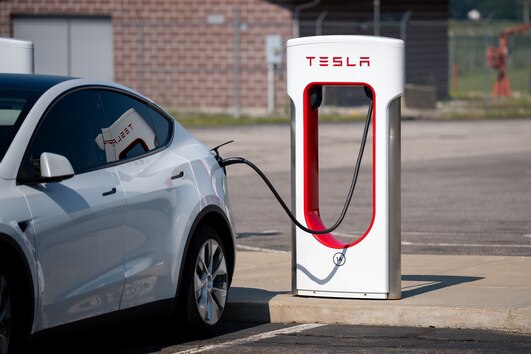
A Tesla Supercharger electric vehicle charging station is seen in Ohio, Aug. 4, 2026. (Marcin Golba/NurPhoto via Getty Images)
(WASHINGTON) -- The Department of Transportation is easing fuel economy standards that were put in place during the Biden administration.
Transportation Secretary Sean P. Duffy said Monday that changing CAFE (corporate average fuel economy) standards for vehicles will make them more affordable by establishing “commonsense” guidelines for automakers.
“This administration is delivering relief to families and reviving the beating heart of American manufacturing,” Duffy said. “With our commonsense standards in place, we are making the American dream affordable again, putting safer cars on the road, and investing in the American autoworker.”
The new Trump administration rule reduces the previous average fuel economy requirement from 50.4 miles per gallon by 2031 to 34.9 miles per gallon by 2031. It also eliminates the need for automakers to invest in electric vehicle production to help meet those requirements. The rule reverses the requirements set by the Biden administration in 2024.
“This rule restores integrity to the national fuel economy program, balancing vehicle affordability and energy conservation goals while improving safety on our roadways,” National Highway Traffic Safety Administration Administrator Jonathan Morrison said in a statement. “Newer cars are safer cars. By reducing vehicle prices, more American families will be able to afford newer vehicles, and sensible standards allow automakers more freedom to design and produce vehicles consumers actually want. I’m proud of our fantastic team of expert engineers, economists, and lawyers for the tremendous job they’ve done finalizing this rule.”
The agency is also changing the classification of light truck and passenger vehicles beginning in 2030.
“This reclassification will eliminate the incentive to add equipment and alter designs for classification purposes, which will result in greater availability of lower-cost vehicle options for consumers,” the Department of Transportation said in a statement. “Instead, automakers will develop vehicles that meet consumer wants and needs. With the current vehicle classification, manufactures are disincentivized from making hatchbacks, wagons, and smaller footprint vehicles in general.”
NHTSA says current regulations have encouraged manufacturers to add features or make design changes primarily for regulatory purposes, reducing the availability of smaller, lower-cost vehicles. It also claims the change will cut the average cost of new vehicles by as much as $1,300 on average and could save Americans $138 billion over the next five years. The average price of a new vehicle was $49,855 in July, according to Kelley Blue Book.
These new standards are also expected to reduce U.S. yearly oil consumption by 1.3 billion barrels in 2050, according to the DOT.
President Donald Trump posted on social media over the weekend that these fuel economy standards for vehicles will “take the waste out of building cars in America” and subsequently lead to “LOWER PRICES.”
CAFE standards were established in 1975 to promote fuel conservation and reduce U.S. dependence on foreign oil. The standards require automakers to meet fuel economy targets across their fleets, which can also help reduce pollution and fuel costs for drivers. Since the standards are calculated using a manufacturer’s overall fleet average, electric and hybrid vehicles can improve that average, allowing automakers to sell less fuel-efficient vehicles, such as trucks and SUVs, while still meeting the requirements.
The Trump administration has argued that the previous CAFE standards effectively functioned as an EV mandate. However, NHTSA’s 2024 rule did not require vehicle manufacturers to make EV vehicles. The standards in the previous rule were “performance-based” and manufacturers were encouraged to “apply their expertise to find the appropriate technology path that best meets all desired outcomes."
Environmental groups and climate experts quickly condemned the NHTSA’s decision, warning of potential adverse effects on air quality and human health.
Gina McCarthy, a former EPA administrator during the Obama administration and the current chair of the advocacy group America Is All, said in a statement: “For fifty years, fuel economy standards have saved Americans money and cut pollution at the same time, creating cleaner air, lowering prices at the pump, and reducing our reliance on fossil fuels. Rather than keeping the U.S. at the forefront of innovation and improving affordability, this administration has chosen to do the opposite.”
“Cleaner, more efficient vehicles are good for consumers, good for jobs, and good for public health. Governors, mayors, and businesses are pressing forward to find solutions for America’s growing affordability crisis while reducing carbon emissions. And they will keep pressing forward – with or without Washington,” she added.
The Sierra Club said argued that less fuel-efficient vehicles will increase gas use, costs for drivers and air pollution.
“Less fuel-efficient cars mean more gas burned, spending more at the pump, and dirtier air in our communities,” said Katherine García, Sierra Club Clean Transportation for All Director. “The Sierra Club will fight this senseless rollback every step of the way. We’re going to continue to fight back against this administration’s dangerous and costly attacks on cleaner cars and public health.”
Supporters of the decision said changing the CAFE standards gives automakers greater flexibility in meeting fuel economy requirements.
In response to the new rule, Alliance for Automotive Innovation, a trade group representing major automakers, said it is “still reviewing the final rule, but NHTSA made the right call to better align fuel economy standards with the law and current market conditions.”
“The standards finalized under the previous administration effectively required a switchover to electric vehicles that was out of step with market realities and customer demand. Today’s final rule is an appropriate course correction,” John Bozzella, president and CEO of the Alliance for Automotive Innovation, said in a statement to ABC News.
“What the industry needs is long-term regulatory stability that includes balanced, durable and achievable fuel economy standards that continue to reduce emissions and improve fuel economy. As we’ve said before: This is the formula for preserving consumer vehicle choice and keeping the U.S. auto industry globally competitive,” he added.
The EPA calculates that the transportation sector is the largest contributor of direct greenhouse gas emissions in the country, with cars and trucks accounting for more than 75% of those emissions.Greenhouse gases are the leading contributor to climate change.
A person pumps gas at a Mobil gas station on September 24, 2026 in Austin, Texas. (Brandon Bell/Getty Images)
(WASHINGTON) -- Consumer sentiment dropped in September close to the lowest level ever recorded in the 74-year history of the University of Michigan's monthly survey, fresh data on Friday showed.
Shopper attitudes soured as a monthlong bout of inflation squeezed consumers and an underlying oil supply shock showed little sign of imminent resolution.
The final reading of the University of Michigan index registered at 48.1 in September, marking the second-lowest final reading ever recorded. The index hit a historic low of 44.8 in May, just months after the outbreak of the Iran war, before ticking slightly upward to a level of 51.7 by August.
Prices rose at an annual rate of 3.4% in August, the most recent month on record, federal government data showed. Inflation stands more than a percentage point higher than the Federal Reserve's target rate of 2%.
The average price of a gallon of gas in the U.S. is $4.49, according to AAA, marking a roughly 50% jump since the war began in late February.
Shoppers expect inflation to rise even more over the next year, the University of Michigan consumer survey found, while individuals’ view of their financial outlook has worsened.
Democrats and Republicans alike displayed sizable declines in consumer sentiment in September from the previous month, Surveys of Consumers director Joanne Hsu said in a statement on Friday.
In response to rising prices, a key long-term Treasury rate hit its highest level in nearly two decades on Wednesday, days after the Federal Reserve raised benchmark borrowing costs. The rise in borrowing costs has pushed up rates for loans like credit cards and mortgages, threatening to worsen the financial crunch.
Investors peg a two in three chance of another quarter-point interest rate hike next month, according to the CME FedWatch Tool, a measure of market sentiment.
Despite a stubborn bout of inflation, the economy remains fairly robust by some measures.
A blockbuster jobs report earlier this month showed employers added 162,000 workers in August, demonstrating continued resilience for the nation's labor market. The economy grew over three months ending in June, defying fear of a downturn triggered by the Iran war.
Still, persistently elevated prices have continued to take a toll on shoppers, Fed Chair Kevin Warsh said at a press conference in Washington, D.C., last week.
"The plain fact is that inflation is too high and has been for too long," Warsh said.
A customer purchases gas at a station, Sept. 15, 2026, in Chicago. (Scott Olson/Getty Images)
(NEW YORK) -- Kelsey Benson said she was laid off from a job in sales earlier this month, leaving her without health insurance at a time when price hikes are weighing on the rest of her budget.
The monthly out-of-pocket cost of Benson’s name-brand medication for attention deficit hyperactivity disorder jumped from $120 to $500, she said. That sudden expense came at a time she was already struggling with rising rent and utility costs, she said.
“You should not have to wear yourself down to nothing to be able to live,” said Benson, 32, who lives in Queens, New York.
The financial strain has complicated Benson and her partner’s potential plans for buying a house and having a child, she said.
“The dream, many people have been told, is you get the white picket fence, the house,” Benson said. “It’s not attainable.”
Benson is hardly the only person getting hammered by price hikes. A monthslong surge of inflation set off by the Iran war has driven up costs nationwide for gasoline, groceries and other products, squeezing many household budgets.
Shoppers expect inflation to rise even more over the next year, according to a recent University of Michigan consumer survey, while individuals’ view of their financial outlook has worsened.
In response to rising prices, a key long-term Treasury rate hit its highest level in nearly two decades earlier this month, even before the Federal Reserve raised benchmark borrowing costs. The rise in borrowing costs pushed up rates for loans like credit cards and mortgages, threatening to worsen the financial crunch.
“A lot of people across America have cut the expenses that they can cut,” Ted Rossman, a financial analyst at nonprofit advisory firm Money Management International, told ABC News. “They feel like they can’t catch a break.”
Drew Davis, 26, a law student in New York City, said the recent surge in prices dawned on him in the meat section at his local grocery store.
During a shopping trip this summer, Davis said he noticed prices for his preferred types of beef and chicken had climbed $1 or $2 since he began law school three years ago.
“I'll buy, like, fattier beef, or I'll buy chicken instead of beef mostly, just because it's cheaper a lot of the time,” Davis said.
Davis, who is financing his education with student loans, said his debt factors into spending decisions such as where he lives and what he buys amid an economic environment he described as “intense.”
Prices rose at an annual rate of 3.4% in August, the most recent month on record, federal government data showed. Inflation stands more than a percentage point higher than the Federal Reserve's target rate of 2%.
The average price of a gallon of gas in the U.S. is $4.47, according to AAA, marking a 50% jump since the war broke out.
Grocery prices have increased more than 20% over the last five years, U.S. Bureau of Labor Statistics data showed.
“People are feeling what’s happened the last several years,” Rossman said. “The accumulated toll is really stacking up.”
Steve Prentice, 70, who is semi-retired and works part-time at a yarn store in Tennessee, said the most noticeable price increase is gas.
“This is the first time I can recall gas being above $4 [a gallon],” Prentice said.
The cost crunch prompted Prentice and his wife to seek out bargains on groceries. Prices at all of the chain supermarkets nearby have “generally gone up,” Prentice said, forcing him and his wife to turn to lower-priced stores.
“Their prices seem a little bit more stable, but even they have gone up,” Prentice said.
Federal Reserve Chair Kevin Warsh speaks during a news conference following Federal Open Market Committee meetings at Federal Reserve Headquarters, Sept. 16, 2026, in Washington. (Andrew Harnik/Getty Images)
(NEW YORK) -- A key long-term Treasury rate hit its highest level in nearly two decades earlier this month, even before the Federal Reserve raised benchmark borrowing costs.
The Fed hiked interest rates a quarter of a percentage point in an effort to battle back a monthslong surge of inflation. The rise in borrowing costs pushed up rates for loans like credit cards and mortgages, threatening to worsen a budget crunch as shoppers weather price hikes for gas and other essentials.
Those dangers, however, come along with potential financial benefits, some experts told ABC News. The hike in borrowing costs directly benefits savers, who stand to gain from an uptick in the interest yielded by accounts held at banks, they said.
Financial products like high-yield savings accounts and certificates of deposit, or CDs, provide options for investors eager to take advantage of the favorable environment for savers, they added, though such products carry limitations of their own.
"Higher interest rates incentivize people to park money in the bank and spend less of it," James Cox, a financial advisor and managing partner of Virginia-based Harris Financial Group, told ABC News. "If you're a person who has accumulated assets, higher interest rates can be beneficial."
Interest rate hikes make it more lucrative for banks to hold money, which in turn puts pressure on financial institutions to pass along some of those earnings to depositors through higher yields.
As a result, some banks have bid up each other's yield offerings to attract customers.
The average return on a savings account in the U.S. registered at 0.64% annual percentage yield as of Tuesday, marking a slight increase from 0.62% annual percentage yield last month, before the Fed's rate hike, Bankrate data showed.
An incremental uptick in interest rates for savings accounts or other funds may provide a modicum of financial benefit, but it is unlikely to dramatically improve a household's income, Cox said.
"It's not going to materially change the interest-rate picture for a family's savings," Cox said.
Even so, analysts said, investors can avail themselves of products that make the most of higher interest rates, such as high-yield savings accounts and CDs.
Financial institutions have not settled on what exactly constitutes a high-yield savings account. But the name indicates the key characteristics of this financial product: a savings account that delivers high returns.
While no specific threshold earns an account the moniker of "high-yield," the enhanced savings from such accounts can prove substantial, some analysts said.
High-yield savings accounts offer customers as much as 4.2% annual percentage yield, Bankrate data showed, putting interest rates well above the nationwide average of 0.64% for savings accounts.
"As a saver, you can make more money in a high-yield savings account," Kate Ashford, lead wealth writer at NerdWallet, told ABC News. "There's no real downside."
The annual inflation rate currently stands at 3.4%, meaning price increases outpace the average interest yielded by savings accounts at banks. As a result, the purchasing power of money kept in a savings account can drop, even as the total dollar amount increases, Ashford said.
"A high-yield savings account can prevent inflation from eating away the value of what you've got," Ashford said.
In some cases, the interest rate on a high-yield savings account increases automatically in response to a rate hike at the Fed.
"A high-yield savings account of my own saw an increase within 24 hours of the Fed's announcement," Ashord said.
A CD, meanwhile, is a type of savings account that offers a fixed interest rate over a given period of time. If depositors remove their funds before their agreed-upon end date, however, they incur a penalty.
Financial institutions often offer CDs at elevated interest rates in the aftermath of a rate hike at the Fed. Typically, long-term CDs spanning three or five years deliver higher interest rates than short-term CDs, since a wider time horizon requires investors to part with their funds for a longer period.
High-yield savings accounts and CDs carry some downside, however. The interest rate promised by a high-yield savings account or a CD means it lacks the possibility of enormous gains, unlike a riskier instrument such as the stock market, some analysts said.
"In the stock market, you have the potential to make more on your money over time," Ashford said.
Still, Ashford added, a high-yield savings account or CD "gets your money moving in a forward direction."
(NEW YORK) -- Converse has discontinued an advertisement following public backlash last week over what critics said appeared to be Ku Klux Klan symbolism and lynching in the shoe and apparel company's ad campaign.
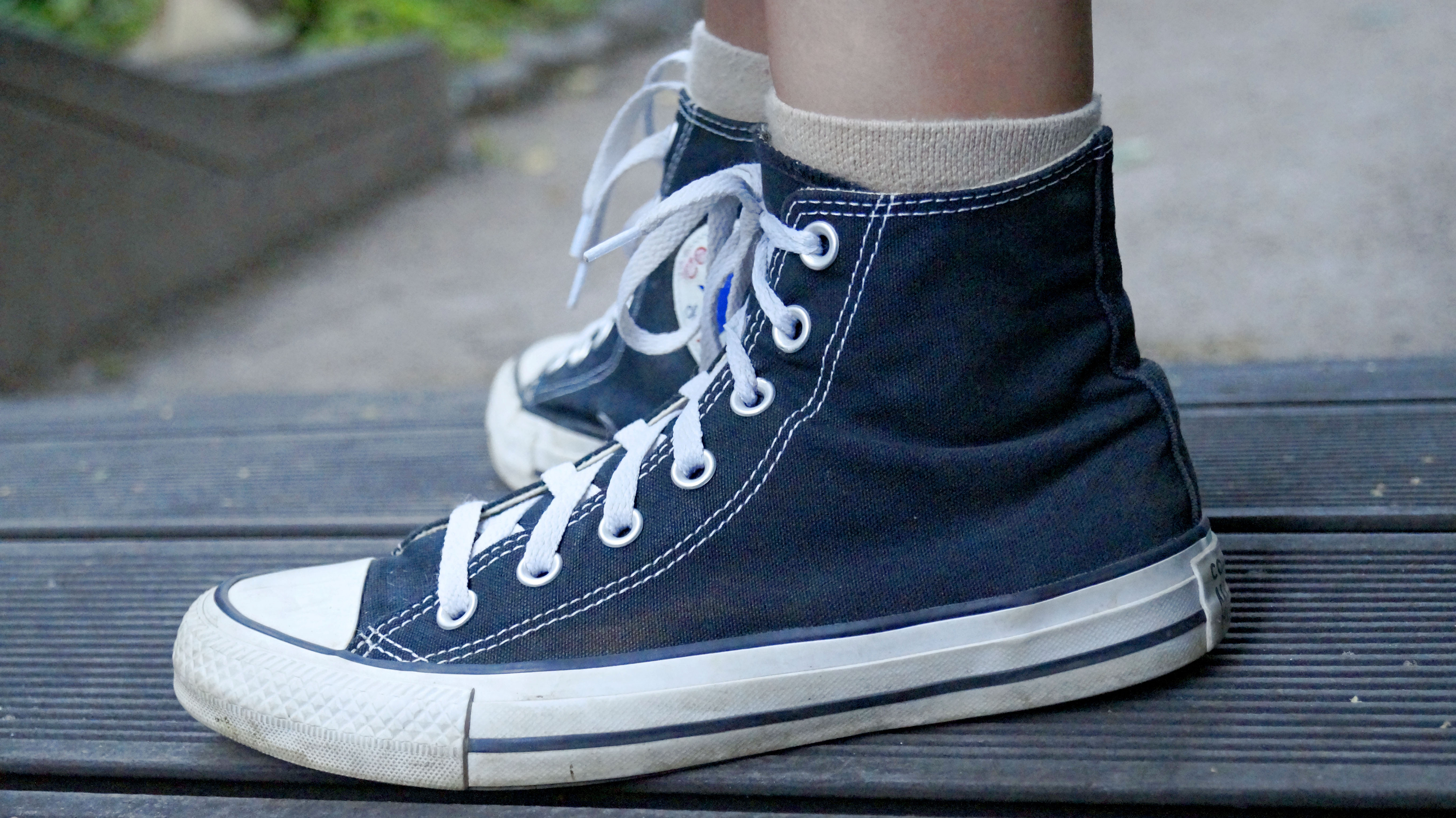
One of the images in the ad showed the bottom half of a person wearing a white, calf-length skirt-like garment that some critics said resembled a KKK robe, while holding a pair of black sneakers in one hand with their arm fully extended down by their side.
Critics said lighting in the photograph makes the shoes look as if they are dangling in the air next to the person in the white garment, resembling someone being hanged.
Shadows in the photograph also create a triangle-shaped light on the white robe that critics said further resembled the top peak of a Klan hood.
“We’re sorry. We understand why this image is deeply upsetting and recognize that we got this wrong,” Converse, who is owned by Nike Inc., said in a statement to ABC News Monday. “We removed it from our channels and are working to remove it everywhere it appeared. This should not have happened and we will do better.”
Civil rights attorney Lee Merritt, who represented the family of Ahmaud Arbery, a Black man who was chased and fatally shot by three white men while jogging in Georgia in February 2020, weighed in on the controversial promotional campaign.
"We keep having this conversation because corporations keep failing the same test," Merritt said in a social media post. "Do better means catching this before it airs -- not after we’re offended.”
Rep. Troy Carter, D-La., said in a statement that the advertisement was neither creative nor artistic.
“Black pain is not a marketing prop,” Carter said. “Lynching is not a creative concept. The Ku Klux Klan is not an aesthetic.”
The photos were part of a campaign to promote the Chuck 70 X sneaker. The advertisement was a collaboration with K-pop singer Karina, who is with the group aespa.
ABC News has reached out to representatives of Karina for a comment.
ABC News' Sabina Ghebremedhin contributed to this story.
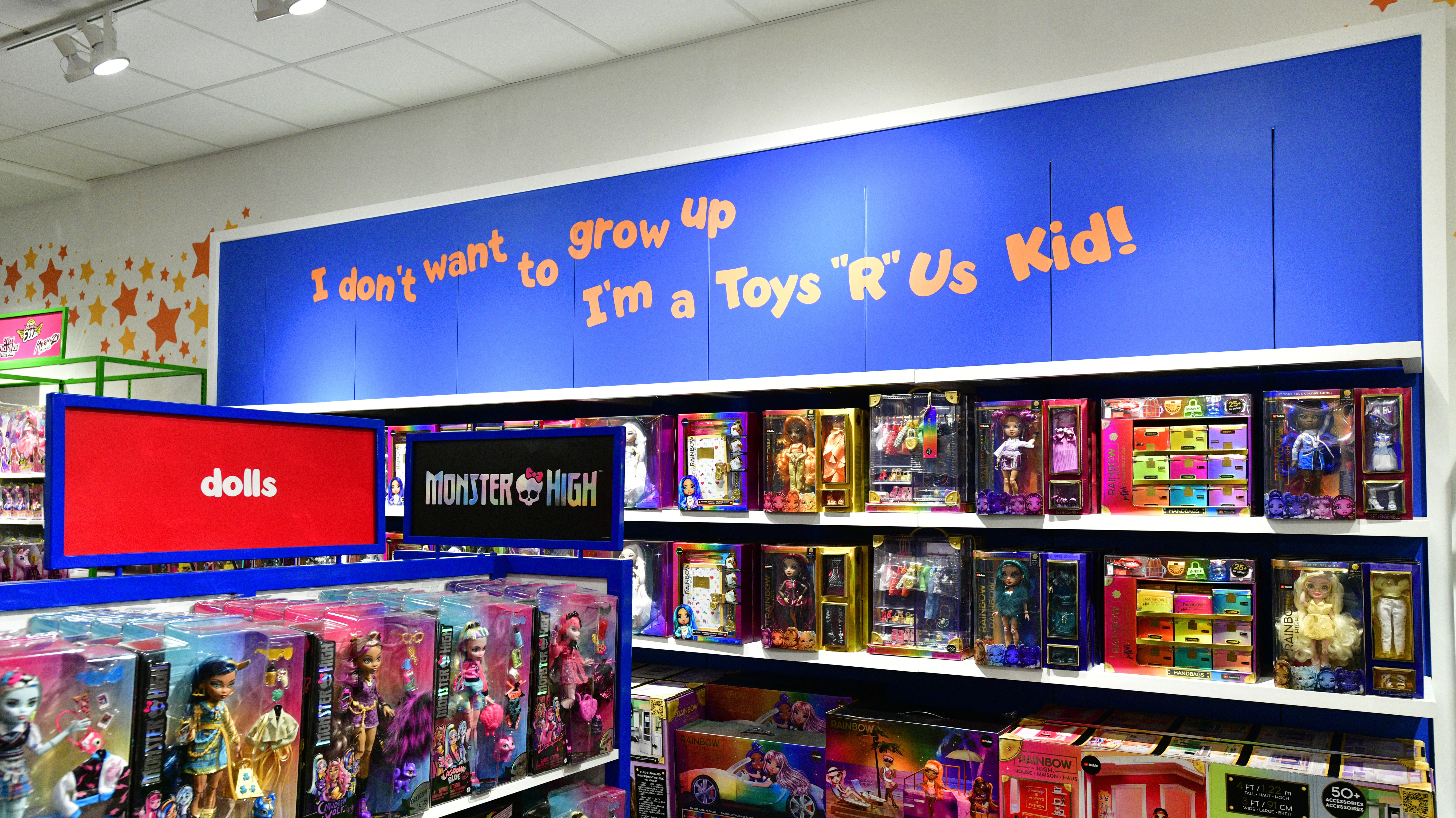
Toys R Us Grand Opening at Macy's Herald Square on Oct. 13, 2022, in New York City. (Eugene Gologursky/Getty Images for Macy's, Inc.)
(NEW YORK) -- Toys R Us is planning a major expansion in the U.S. with the addition of 120 new standalone stores by the end of 2026.
The toy retailer, which currently has 40 standalone stores and Toys R Us shops inside Macy's stores across the country, announced the strategic move, which is being carried out in partnership with Go! Retail Group, on Thursday.
"This is a major moment for [Toys R Us] as we significantly expand our presence across the United States," Jamie Uitdenhowen, executive vice president of Toys R Us at WHP Global, said in a statement. "Together with our incredible partners, we are growing Toys R Us in unique ways to meet customers wherever they are, whether that's at a standalone store in their hometown, inside Macy's, at the airport or at a Navy Exchange."
The statement continued, "Toys R Us has always been a place for discovery, and we're building on that legacy by bringing customers the hottest toys, biggest trends and experiences that make the brand unlike any other."
In addition to established toys such as LEGO bricks, Barbie dolls and Hot Wheels cars, Toys R Us said it will stock popular new toys from "KPop Demon Hunters," Pokemon and more.
Select new Toys R Us stores will feature "Creator Studios," described as "dedicated spaces where influencers, creators and toy brands can create content, unveil new products and host toy reveals, launches and special events," the company said.
Select stores will also have candy shops and cafes inside for customers.
The new plan is a dramatic transformation for Toys R Us, which filed for bankruptcy in 2017 and closed most of its U.S. stores nearly a decade ago.
Private equity firms had previously acquired the retail chain in 2005 for $6.6 billion, according to Securities and Exchange Commission filings.
Toys R Us returned briefly with two new brick-and-mortar stores in 2019, however, those locations were shuttered not long after.
WHP Global acquired a controlling stake in the retailer in 2021, and the company launched a new two-story global flagship store at the American Dream shopping mall in East Rutherford, New Jersey, that December.
The retailer subsequently opened several additional standalone locations and "shop-in-shop" locations inside Macy's stores in several U.S. states, as well as a second U.S. flagship store at Mall of America in 2023.
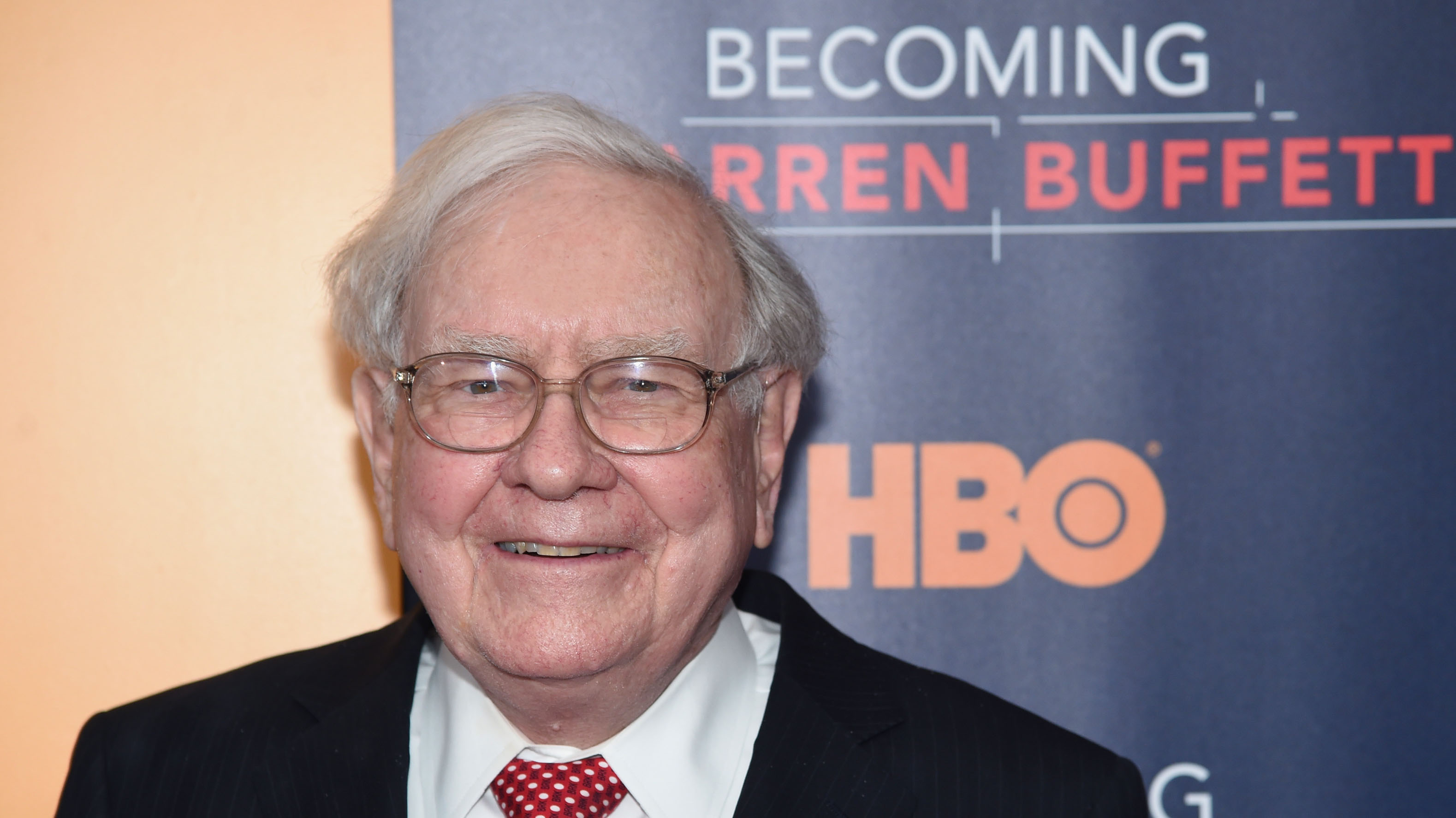
Warren Buffett attends 'Becoming Warren Buffett' World Premiere at The Museum of Modern Art on Jan. 19, 2017, in New York City. (Jamie McCarthy/Getty Images)
(NEW YORK ) -- Warren Buffett has stepped down as chairman of Berkshire Hathaway, the company announced in a statement published early on Friday, having served in the role since 1970.
Buffett, 96, is now chairman emeritus of the company and will remain a director, Berkshire Hathaway said.
His son, Howard Buffett, will take over as Berkshire Hathaway's new chairman, the statement added. Howard Buffett has been a member of the company's board since 1993.
This is a developing story. Please check back for updates.
Gas prices are displayed at a Pilot gas station on Sept. 17, 2026, in Newark, New Jersey. (Michael M. Santiago/Getty Images)
(NEW YORK) -- The average price for a gallon of diesel was still hovering around a record-high of $6.43 as of Friday morning, according to the latest data published by GasBuddy.
The historic increase in the price of diesel comes amid continued disruption in the Strait of Hormuz -- sparked by the U.S.-Israeli attack on Iran in February -- and Russia's ongoing invasion of Ukraine, which in recent years has seen an intensification of long-range Ukrainian attacks on Russian oil facilities.
The sustained increases in oil and diesel prices have prompted concerns of rising costs across all sectors of the economy -- from fuel and energy costs for drivers and homeowners to increased prices of food and travel as producers and companies grapple with narrowing margins.
The nationwide average price for a gallon of regular gas was at $4.47 as of Friday, according to GasBuddy -- up $1.53 since the U.S. war with Iran started.
Rising prices are of particular concern for those households reliant on heating oil. They could face winter bills more than 31% higher than last year, according to a report published earlier this week by the non-profit National Energy Assistance Directors Association.
Even for those who do not heat their homes using oil, overall winter heating costs are expected to rise by more than 8.7% this year, the NEADA report said.
As of Friday, oil prices were edging lower but remained above $100 a barrel. Brent crude oil prices, a benchmark for global trading, were around $103 per barrel, down roughly 1.3%. WTI crude oil, used as the North American benchmark, was trading at around $102 per barrel down 0.4%.
Since diesel is the lifeblood of the supply chain, a rise in fuel costs may result in higher prices charged by wholesalers in response to elevated transport expenses. In turn, retailers could pass those costs along to shoppers, raising prices on shelves.
The price hike for any individual item would likely be modest, but the pileup of extra costs across an array of goods could weigh on wallets, analysts previously told ABC News.
As a result, the rise in diesel costs threatens to worsen a surge of inflation set off by the outbreak of the Iran war nearly seven months ago.
The annual inflation rate stood at 3.4% as of August, the most recent month on record, putting inflation more than a percentage point above the Federal Reserve's target rate of 2%.
On Wednesday, the Federal Reserve raised interest rates for the first time since 2023 in an effort to contain price increases. Higher borrowing costs may constrain spending among businesses and consumers, staunching demand for products and slowing price hikes.
Speaking to reporters on Wednesday, Federal Reserve chair Kevin Warsh acknowledged the rate increase would not directly address the surge in fuel prices. Rather, he said, elevated interest rates could help prevent price hikes from extending throughout the economy.
"We cannot affect any individual price, whether it be oil prices, whether it be food stuffs at the grocery store. But what we can do, and will do, is ensure that any change in relative prices don't broaden out," Warsh said.
Emily Normandin-Parker is seen in this photo. Her parents Carol Normandin and Ken Parker were awarded $40 million in arbitration after their daughter was struck and killed after her Uber driver left her along a Southern California freeway. (Courtesy Panish Shea Ravipudi LLP)
(NEW YORK) -- The parents of a 23-year-old woman who was struck and killed after her Uber driver left her along a Southern California freeway are speaking out after being awarded $40 million in an arbitration against Uber and the driver.
Carol Normandin and Ken Parker, the parents of Emily Normandin-Parker, sat down exclusively with "Good Morning America" in an interview aired on Thursday to discuss their daughter's death and the arbitration award.
Asked if they believe Uber put profits over their daughter's safety, Normandin responded, "Absolutely."
Normandin-Parker, a 2022 UCLA graduate, was taking an Uber home with her friend Luna Moore after a night out when Moore became sick during the ride, according to the arbitration award.
The driver, Vu Tran, pulled over on State Route 73 in Orange County at a gore point -- the triangular area by the off-ramp on the freeway, according to the arbitration.
"He chose to pull over there and demand money and kick them out of the car. All I can think that Emily was doing -- her friend, the driver arguing -- was to get help. They argue, Emily gets hit while they're arguing," Normandin told ABC News' Trevor Ault in an interview that aired Thursday on "GMA."
In his arbitration award, retired Judge Richard A. Stone, who served as the arbitrator, described the gore point as an "unsafe and illegal" area and found that Tran could have instead taken the nearby MacArthur Boulevard exit and stopped in a safe location.
Stone also wrote in the award that Tran knew Normandin-Parker and Moore were intoxicated and had argued with Moore over a cleaning fee before leaving the women at the location.
Normandin-Parker later entered the freeway and was struck and killed by a vehicle.
According to the arbitration award, GPS data showed Tran drove near Normandin-Parker's body before taking the next exit and calling Uber to seek a cleaning fee.
Stone described Tran's testimony as "largely -- in fact, almost entirely -- incredible and unbelievable."
The arbitrator also found Tran showed "far more worry for his new car than he did for his passengers" and that he had options to get the women to a safe location.
According to attorneys representing Normandin-Parker's parents, evidence presented during the arbitration showed Uber had received previous complaints about Tran's driving. One rider described a trip with Tran as "the least safe" ride they had experienced, while another said "he cannot drive."
Parker described the complaints to "GMA" as "driving the wrong way on a one-way, erratic driving, almost hitting pedestrians, very erratic behavior."
Following the five-day arbitration, Stone awarded $20 million each to Normandin and Parker, finding Uber and Tran jointly and severally liable. Moore was separately awarded $300,000. The arbitrator did not award punitive damages.
Stone also found Uber vicariously liable for Tran's negligence as a common carrier. In his decision, Stone rejected Uber's argument that it is "merely a technology company" connecting riders with drivers, finding that Uber provides transportation services to the public through its app, sets prices and controls key aspects of the rider experience.
The arbitrator also rejected Uber's argument that Proposition 22 -- a California ballot measure approved by voters in 2020 that allows companies to classify app-based drivers as independent contractors instead of employees -- prevented the company from being held liable for Tran's conduct.
In a statement to "GMA," an Uber spokesperson said, "No family should have to suffer the loss of a child, and our thoughts continue to be with the Normandin-Parker family."
"While we respect the arbitration process, we believe the arbitrator was wrong in holding Uber legally responsible for the tragic events of that night," the statement continued.
"We have continued to strengthen our approach to safety over the years...including additional guidance to drivers about avoiding drop-offs in unsafe locations," the statement said.
Normandin-Parker's parents also spoke to "GMA" about Uber's efforts to keep the arbitration award from being made public.
"We didn't have much time to absorb the award before Uber almost immediately started contending that it could not be made public and then sent an agreement to us requiring non-disparagement, the $10 million penalty for saying anything bad about Uber," Parker said.According to a press release from their attorneys, Normandin and Parker established the Emily Normandin-Parker Foundation following their daughter's death to advocate for ride-hailing safety and corporate accountability. Proceeds from the arbitration award will be used to fund the foundation, the release said.
Ian Samson, an attorney for the family, told "GMA," "he said, I'm troubled by all this, and changing the policies and practices is something Uber should do. And since the arbitration award was issued, what I've seen is great urgency by Uber to try to keep it secret."
According to a press release from their attorneys, Normandin and Parker established the Emily Normandin-Parker Foundation following their daughter's death to advocate for ride-hailing safety and corporate accountability. Proceeds from the arbitration award will be used to fund the foundation, the release said.
When asked what else they wanted people to know about their daughter, Normandin said, "Her laugh was contagious."
"And she was funny. And she could sing. Oh my god, could she sing," Normandin said.
Federal Reserve Chair Kevin Warsh speaks during a news conference on July 29, 2026, in Washington, D.C. (Win McNamee/Getty Images)
(WASHINGTON) -- The Federal Reserve raised interest rates on Wednesday in an effort to battle back a monthslong surge of inflation set off by the Iran war. The move marks the central bank's first rate increase since July 2023.
The central bank hiked its benchmark rate a quarter of a percentage point, putting interest rates at a level between 3.75% and 4%.
That figure marks a significant drop from a recent peak attained in 2023, but borrowing costs remain well above a 0% rate established at the outset of the COVID-19 pandemic.
A 12-member policymaking board voted unanimously in favor of the rate increase.
"The plain fact is that inflation is too high and has been for too long," Fed Chair Kevin Warsh said at a press conference in Washington, D.C., on Wednesday. "The committee’s unanimous vote shows our resolve to achieve price stability on a timelier basis."
The move appears aimed at containing a recent bout of price increases. Global oil prices are hovering near a four-month high and the average price for a gallon of gasoline tops $4.30, according to AAA.
The U.S. economy has shown signs of additional strain in recent days, including a bond selloff that is pushing up borrowing costs for credit cards and mortgages.
The price woes previously divided central bankers eager to contain inflation but reluctant to cool off the economy and weaken the labor market.
The Fed opted to hold interest rates steady at its most recent meeting in July. Three of the 12 members on the Fed's policymaking board, however, voted in favor of a rate hike, marking the largest number of dissenters casting ballots in the same direction in a decade.
Federal Reserve Chair Kevin Warsh, who took the helm of the central bank in May, has vowed to cool off persistently elevated price increases.
"The Fed's predominant focus right now should be on prices," Warsh said in remarks last month at the Fed's annual summer gathering in Jackson Hole, Wyoming.
Prices rose 3.4% in August compared to a year earlier, maintaining the same level from the prior month, federal government data last week showed.
Inflation stands more than a percentage point higher than the Federal Reserve's target rate of 2%.
Despite a stubborn bout of inflation, the economy remains fairly robust by some measures.
A blockbuster jobs report earlier this month showed employers added 162,000 workers in August, demonstrating continued resilience for the nation's labor market. The economy grew over three months ending in June, defying fear of a downturn triggered by the Iran war.
Fighting in the Middle East kept global crude prices above $105 a barrel as of Wednesday, which amounted to a rise of about 50% since the Iran war broke out in late February.
The average price of a gallon of gas in the U.S. stands at $4.36, putting it more than $1.30 higher than before the war, AAA data showed.
Record-high diesel prices have raised transport costs for many everyday products, including groceries, clothes and furniture.
The war in Iran, which began with a large-scale U.S.-Israeli attack in the winter, prompted Iran's near-closure of the Strait of Hormuz, which facilitates one-fifth of global crude supply. Saudi Arabia over the weekend shut down a key pipeline bypassing the strait, which further constrained oil delivery and put upward pressure on prices.